
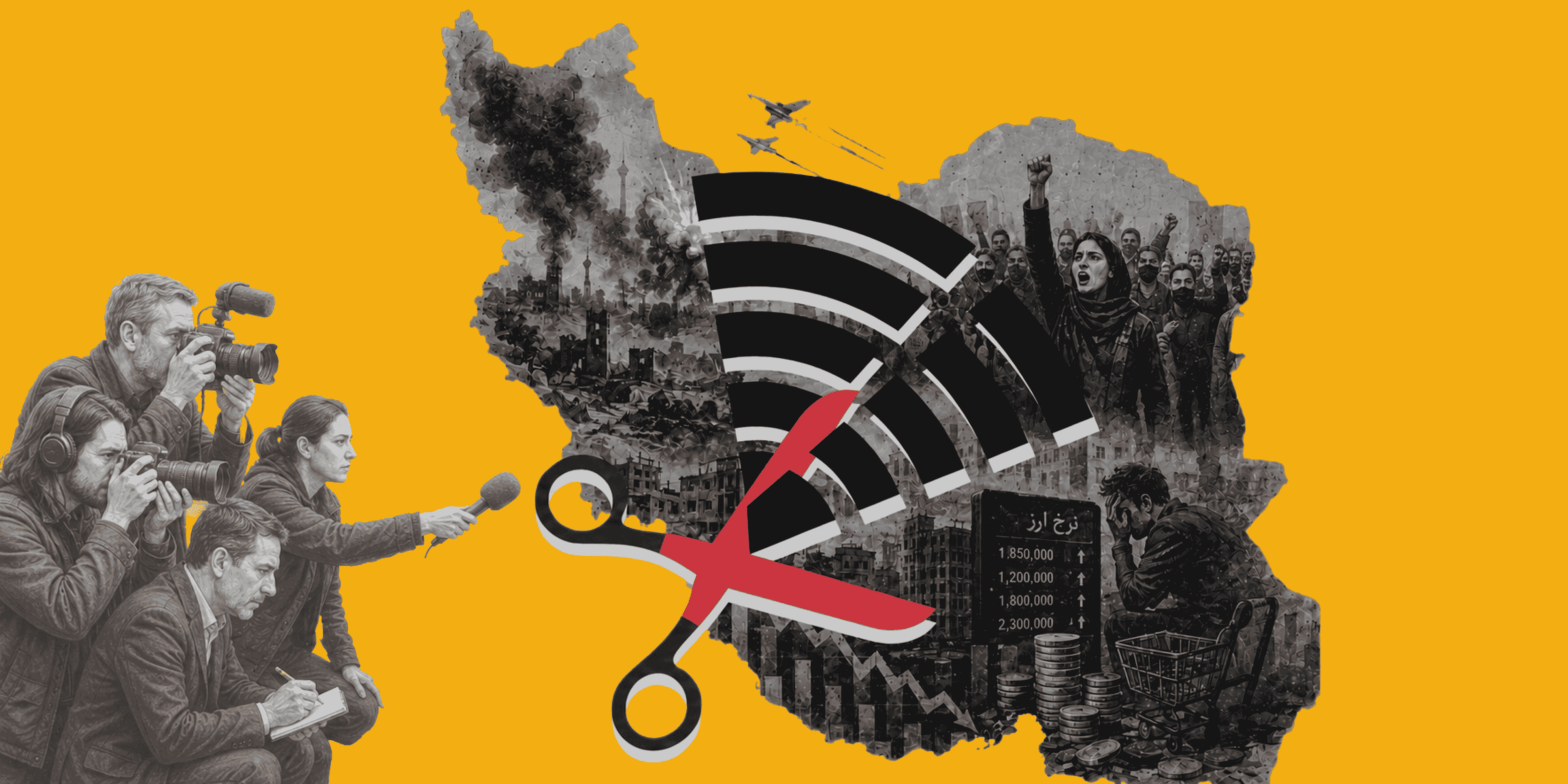
This report is based on an analysis of 20 in-depth, semi-structured interviews conducted with 16 adults and 4 adolescents from different cities across Iran. The participants represent a diverse range of professions and social backgrounds, from students and homemakers to programmers, traders, and freelancers. Despite differences in age and occupation, all of them share a common reality shaped by the consequences of international internet shutdowns in Iran: a reality in which they are forced to pay exorbitant costs for unstable VPNs and proxy configurations, compelled to use domestic platforms for work, education, and everyday communication, and left with deep anxiety and uncertainty about the future of internet access in Iran as the country moves toward a “tiered” internet access model.
One of the report’s key findings is the emergence of a growing divide between what many Iranians believe should be a basic right, free and equal access to the global internet, and the reality they face in everyday life. In practice, many users are now forced to rely on expensive and unreliable VPNs or use domestic platforms connected to Iran’s state-controlled national intranet, which is increasingly replacing open access to the global internet. This experience is accompanied by persistent feelings of anger, humiliation, and shame.
At the same time, the interviews also reveal a form of resistance rooted in an ethical refusal to accept the normalization of a “tiered internet” system and a determination not to fully surrender to the current conditions.
The interviews with adolescents reveal additional layers to this crisis. For many teenagers, the internet is not just a communication tool, but a space where identity, personal interests, and future aspirations are shaped. Losing access to platforms such as YouTube, TikTok, and Pinterest means losing what many of them describe as a “space for inspiration and learning,” one for which no meaningful domestic alternative exists.
At the same time, the experience of self-censorship when using domestic messaging applications, combined with the constant feeling of being monitored, raises concerns that, for the next generation, the very concept of free communication may gradually be replaced by a model defined by surveillance and risk.
From the perspective of online education, learning has increasingly been confined to a limited ecosystem of domestic platforms, including Shad, Eitaa, Bale, and Skyroom, which participants consistently described as unstable, slow, and ineffective.
More broadly, the report warns that the internet in Iran is no longer merely a technological utility, but a space deeply tied to identity, ethics, and politics. Decisions such as whether to purchase a VPN, use Starlink, join domestic messaging platforms, or accept a tiered internet model increasingly force users to confront a deeper question: What kind of society do I want to live in, and how much am I willing to pay for the life and freedoms I seek?
Key Findings at a Glance
- Most interviewees described the shutdown of the global internet in Iran as a form of “social injustice” and a “violation of a basic human right.”
- The VPN market has become deeply unequal. Reported prices ranged from approximately $0.88 per gigabyte to approximately $17.65 per gigabyte (both calculated at an exchange rate of 170,000 tomans per US dollar). Only those whose income depends entirely on internet access remain willing to pay such extreme costs for VPN services. As Iran’s minimum hourly wage in 2026 stood at roughly $0.48, stable VPN access has effectively become a luxury.
- A large segment of the population, particularly lower-income, middle-aged, and less digitally dependent users, has effectively given up on accessing the global internet. Instead, they have turned to satellite television, SMS, voice calls, or domestic platforms for communication, information, and entertainment.
- The use of domestic services, especially platforms such as Bale, Eitaa, Rubika, Aparat (video-sharing platform), Zarebin (search engine), and GapGPT (AI chatbot), all repeatedly mentioned throughout the interviews, is generally experienced as something driven by necessity rather than choice and is often accompanied by feelings of anger, frustration, humiliation, and shame.
- Users viewed Starlink with a mix of hope and fear: while many described it as a “golden opportunity” to regain access to the global internet, they also saw it as carrying serious legal and financial risks. The idea of collectively purchasing and sharing Starlink access emerged as a potential solution, but fears of surveillance, public reporting, and declining social trust have limited its wider adoption.
- Migration appeared in almost every interview as an underlying possibility. Although participants did not frame it as being “solely because of the internet,” internet restrictions were consistently identified as one of the primary catalysts driving the desire to leave the country.
- Responses to the prospect of a tiered internet model generally fall into two categories: ethical resistance and refusal to accept privileged access based on favoritism, or reluctant acceptance driven by desperation and the need to maintain livelihoods.
- The psychological consequences of internet shutdowns, including depression, professional burnout, feelings of falling behind the modern world, and growing isolation within families, were as prominent in the interviews as the economic harms, and in some cases even more so.
Methodology and Participant Profile
The findings of this report are based on a five-part questionnaire. Each section focused on a specific dimension of users’ internet experiences under Iran’s current conditions:
- Section One: Current methods of accessing the global internet, and the services, functions, and capabilities that users feel they have lost.
- Section Two: The amount users are willing to pay for internet access through VPN services.
- Section Three: Users’ preferences between purchasing expensive VPNs or relying on domestic platforms and applications.
- Section Four: Perceptions of Starlink, including its opportunities and risks.
- Section Five: Adaptation to the current situation, expectations about the future, and reactions to the prospect of a tiered internet model.
Demographic Composition
Among the 16 adult participants, 9 were women, and 7 were men. Their ages ranged from 23 to 52 years old. Geographically, the interviews were conducted with participants from Tehran, Karaj, Mashhad, Urmia, Zanjan, Kashan, and Shiraz.
The participants also represented a wide range of professions and social backgrounds, including office employees, freelancers, traders, programmers, homemakers, university students, language teachers, Instagram content creators, writers, and embassy staff.
In addition to the main report, four interviews were conducted with students aged 11-17 from Tehran and Isfahan to capture adolescent perspectives.
Participants were selected using purposive sampling to capture a diversity of experiences across age groups, gender, and occupational backgrounds, including individuals with varying levels of dependence on internet access for work and daily life. Geographic diversity emerged through recruitment and was not treated as a predefined sampling criterion.
While the sample is not statistically representative of Iranian society as a whole, this qualitative study is intended to capture recurring lived experiences, social patterns, perceptions, and adaptation strategies related to internet shutdowns, digital inequality, and evolving internet restrictions in Iran.
Methodological Considerations
The wording of interview excerpts has been preserved as closely as possible to the original language in order to retain the emotional texture of participants’ responses. Through close analysis of the interviews and lived experiences described by participants, this report seeks to identify recurring patterns and shared themes while also paying attention to distinct and exceptional experiences.
Section One: Methods of Access and Services That Have Lost Their Original Function
1.1. An Overview of Access Methods
A clear pattern emerged across nearly all interviews: access to the global internet has become a form of “privilege reserved for a minority.” Participants generally described access to the global internet as falling into three broad categories: those who remain connected despite the high financial costs, those who have largely abandoned access altogether, and a smaller group that relies on shared access arrangements to stay connected.
- Group One: Connected at Any Cost
Individuals whose work depends heavily on internet access, including programmers, traders, social media managers, international freelancers, and online shop owners. Out of necessity, many in this group have purchased expensive VPN configurations costing between approximately $5.88 and $17.65 per gigabyte (based on an exchange rate of 170,000 tomans per US dollar). - Group Two: Those Left Behind
Older adults, people whose jobs are not directly dependent on internet access, and lower-income groups who cannot afford expensive VPN services. Many in this category have shifted toward satellite television, phone calls, SMS, and domestic applications for communication, information, and entertainment. - Group Three: Shared-Access Users
A smaller group of users who access the global internet collectively through shared VPN subscriptions, sometimes provided by friends or relatives living abroad.
“Among the people around me, even in my own family, almost nobody has bought a VPN because it’s just too expensive. Most people have basically given up on accessing the global internet and now rely on satellite TV for news and information. The only people still paying for VPNs are those who absolutely need internet access for work and making a living.”
— Maryam, 28, married, office employee, Tehran
“The people I knew who still had access to the global internet were paying somewhere between about $3.53 and $5.88 per gigabyte for VPNs (based on an exchange rate of 170,000 tomans per US dollar). After several days of being completely offline, I finally bought one myself at the same prices. But honestly, even with the VPN, connecting is still a struggle. The connection constantly drops, and most of the time it doesn’t work at all.”
— Sina, 42, married, trader, Tehran
“Out of maybe 30 people around me, I only know three who actually managed to buy VPNs and keep access to the global internet.”
— Sina, 42, married, trader, Tehran
1.2. Key Functions and Capabilities That Have Been Lost
The shutdown of the global internet has disrupted many essential parts of everyday life, a pattern that appeared repeatedly across the interviews in different ways. Participants’ experiences generally fell into five broad categories of loss:
a) Work and Income
The most severe damage has occurred in the sphere of work and livelihoods. Participants provided numerous examples of layoffs, unemployment, business collapses, and major disruptions to their own work and to the work of people around them.
These accounts included social media managers who said that “everyone was laid off,” crypto traders who described having “all their orders canceled,” Instagram-based sellers who lost access to their domestic audiences, remote freelancers cut off from international projects, an online language teacher forced to move classes onto domestic platforms, an SEO specialist whose company’s main website became inaccessible, a blogger who reportedly turned to manual labor and cargo carrying to survive financially, and a scientific researcher whose academic writing and research activities had effectively come to a halt.
“Honestly, almost everyone I knew who was working remotely for companies outside Iran ended up losing their jobs. The moment access to the global internet became unstable, those international projects basically disappeared.”
— Mehnaz, 30, married, sales manager in the clothing industry, Tehran
“My whole life was built around crypto trading. I was trading on international exchanges, and that was how I made a living. Now that entire way of earning money has basically fallen apart.”
— Sina, 42, married, trader, Tehran
“I even know a blogger who got so financially desperate after losing work that they ended up taking jobs doing manual labor and carrying heavy loads just to get by.”
— Mahsa, 39, freelancer and Instagram content creator, Shiraz
b) Everyday Professional Tools
Participants provided a long list of services and platforms whose inaccessibility has effectively crippled their professional activities and daily workflows. These included Google Drive, Outlook email services, Microsoft Teams, Figma, Freepik, ChatGPT, Spotify, Castbox, Trello, Booking.com, MyFitnessPal, the trading application “Chand,” and various design-related websites and tools.
Importantly, even users who still have access to VPN services explained that constant disruptions and unstable connections have made these tools unreliable for professional use in practice.
“My employer overseas had paid for 100GB of Google Drive storage for me, but once the internet shutdown happened, it basically became useless to me. I lost access to my Spotify account, too. I even bought an expensive VPN just so I could send my work reports through Telegram, but honestly, even with the VPN, I still can’t reliably upload the files.”
— Milad, 35, married, mechanical engineer working remotely with an Australian company, Mashhad
“I’ve started keeping this mental checklist of things I need to rush and do whenever the internet briefly works again, because there are no real domestic replacements for them, things like Figma, Freepik, and design websites. You just wait for those short moments of connection and try to get everything done as fast as possible.”
— Maryam, 28, married, office employee, Tehran
c) Entertainment and Leisure
Platforms and services such as Instagram, YouTube, TikTok, Pinterest, Twitter/X, LinkedIn, Spotify, Castbox, Booking.com, and even certain online games have effectively disappeared from everyday life for many users.
Participants repeatedly pointed out that, from a broader policy perspective, the loss of entertainment platforms may appear less significant than economic or professional harms. Yet they emphasized that these losses carry profound psychological consequences.
“The internet used to be part of everyday life, part of how we lived. Losing it feels like losing an essential part of life itself. Entertainment is gone, simple pleasures are gone. It’s kind of like clean air: you may not die immediately without it, but that doesn’t mean the psychological damage isn’t real.”
— Reza, 52, single, writer, Karaj
“Some games need access to the global internet. I had one that I used to play every night before going to sleep, it was my little comfort at the end of the day, a puzzle-solving game. And now it just doesn’t work anymore.”
— Mahsa, 39, freelancer and Instagram content creator, Shiraz
c) Communication With Family and Friends Abroad
One of the most hidden, and painful, dimensions of this crisis is the loss of communication with loved ones living outside Iran. WhatsApp, Google Meet video calls, and family group chats have, for many people, effectively disappeared from daily life altogether.
“Two of my mother’s sisters live in the United States, and she used to have video calls with them several times a week. Now she’s lost all of that, and it’s made her much more depressed and emotionally drained. She keeps asking me, ‘Why won’t they turn the internet back on?’ My mother lives alone, and honestly, the internet and staying connected with family were her main source of comfort and companionship.”
— Mahsa, 39, freelancer and Instagram content creator, Shiraz
e) Education and Professional Development
YouTube as a primary source of learning, ChatGPT as a research and work assistant, and access to international scientific and educational resources have all been severely disrupted or entirely lost for many users.
Participants repeatedly stressed that there are no meaningful domestic alternatives to these tools. Many described a growing feeling of “falling behind the modern world,” particularly those whose education, professional development, or creative work depends on access to global digital resources.
“We’re living in the age of AI, and now even something as basic as ChatGPT has become out of reach for us. Instead, we’re forced to use some terrible Iranian alternative like GapGPT, a domestic AI chatbot promoted as Iran’s version of ChatGPT, and honestly, it’s nowhere near the same. It doesn’t even deliver a fraction of what ChatGPT can do.”
— Maryam, 28, married, office employee, Tehran
“I constantly feel like I’m falling behind, especially when it comes to technology. The other day I realized that several new versions of the phones I love had already been released, and I hadn’t even heard about them.”
— Ali, 40, single, embassy employee, Tehran
1.3. Key Losses Experienced by Adolescents
For many teenagers, the image of an “ideal internet” is a collage made up of Pinterest, TikTok, YouTube, Instagram, Google, ChatGPT, and online gaming. None of the domestic alternatives are capable of replacing any of these elements, and adolescents expressed this far more bluntly and directly than adults did.
Participants described Rubika as “complete bullshit,” Aparat, a domestic video-sharing platform often described as Iran’s version of YouTube, as “outdated and primitive,” and Zarebin, Iran’s domestic search engine, as useless because “it’s not even connected to Google.”
1. Visual and Inspiration-Based Platforms
Teenagers emphasized that platforms such as Pinterest, TikTok, YouTube, and Instagram are not merely sources of entertainment. For them, these platforms shape daily routines, provide inspiration, influence identity formation, and even represent potential future career opportunities and sources of income.
According to the adolescents interviewed, there are no meaningful domestic substitutes for these platforms. The alternatives promoted inside Iran, such as Rubika, Aparat, and Zarebin, were repeatedly described by participants as “outdated,” “useless,” and fundamentally incapable of replacing the role global platforms play in their lives.
“I mostly used Pinterest, and there’s absolutely nothing like it on Iran’s internet. Nothing. There’s this search engine called Zarebin, but it’s useless, it’s not even properly connected to Google or anything meaningful. I also used TikTok all the time, and there’s just no replacement for it.”
— Roham, 11, student, Isfahan
“Everything has completely changed. I’m constantly on YouTube, I follow my favorite YouTubers all the time. Honestly, without Instagram and YouTube, I felt like I was losing my mind. I got so frustrated I just wanted to smash my head against the table.”
— Roshanak, 16, student, Tehran
“Rubika has this so-called explore page and it’s complete bullshit. Even the videos on Aparat from YouTubers are ancient. Maybe I’ll eventually be forced to migrate to these apps, but honestly, that migration feels completely worthless.”
— Roshanak, 16, student, Tehran
“There’s supposedly an Instagram alternative called Rubika that some of my friends use, but it’s nothing like Instagram. I used to buy lots of things through Instagram, stylish stuff from Turkey and Dubai. On Rubika, there’s none of that. It’s all ugly stuff.”
— Roham, 11, student, Isfahan
2. Education, Search Engines, and AI Tools
For many adolescents, searching through Google, using educational YouTube content, and relying on ChatGPT for school assignments, research, and supplementary learning materials has become an essential part of everyday education. Participants explained that losing access to these tools has severely disrupted their ability to learn effectively.
GapGPTa, a domestic AI chatbot promoted as Iran’s alternative to ChatGPT, was described by interviewees as “somewhat usable, but extremely weak” compared to the global tools they previously relied on.
“People use GapGPT instead of ChatGPT now. It’s not completely terrible, but it’s not really that useful either. Most students use it anyway because there’s not much else available, and they end up spending a lot of time on it.”
— Arash, 17, student, Isfahan
“I study architecture at a technical high school, so I constantly need to search for references and ideas, and suddenly, none of that was possible anymore. Even Aparat became so overloaded that uploading anything there was almost impossible, and honestly, it hasn’t been successful at replacing these platforms at all. We really resisted installing the Iranian apps for a long time, but eventually we ended up downloading all of them, Shad, Eitaa, Bale, because we were basically forced to.”
— Aida, 17, student, Isfahan
3. Online Gaming
One issue that appeared far more prominently among adolescents than adults was online gaming. Many teenagers explained that they have more or less “given up” on online games altogether because maintaining a stable connection has become nearly impossible.
“I’ve pretty much given up on online gaming at this point and mostly just watch movies instead. There are still a few limited servers that let people connect to international games, but they’re very rare, and not everyone can access them.”
— Arash, 17, student, Isfahan
Section Two: The Economics of Access; How Much Are Users Willing to Pay?
2.1. The Financial Breaking Point
One of the clearest findings of this section is that, for part of the population, access to the global internet has effectively become a fixed monthly expense, a cost they continue to pay despite severe economic pressure. For others, however, the price of maintaining access has exceeded their financial breaking point, leading them to abandon the global internet altogether.
Participants’ accounts suggest that within many social circles, only a small minority can still afford expensive VPN services and unstable custom configurations. Although the exact estimates varied slightly from one interview to another, the overall picture remained remarkably consistent:
- Interview 2: “Maybe around 20% of the people around me still try to access it.”
- Interview 5: “Probably only about 10% of the people I know are still connected, and even they use it very carefully so their VPN data doesn’t run out after just two days.”
- Interview 12: “Out of around 30 people I know, only three still have access.” (roughly 10%)
- Interview 14: “About 90% of the people who gave up on the global internet didn’t even switch to Iranian alternatives afterward.”
- Interview 16: “Around 60% of the people around me no longer have any access to the global internet at all. The remaining 40% connect only by paying ridiculous amounts of money for expensive VPN configurations sold by the gigabyte.”
2.2. Behavioral Patterns in Response to Rising Costs
Three distinct behavioral patterns emerged from the interviews:
1. Forced Continuation
People whose livelihoods depend directly on internet access continue paying these extreme costs despite the financial pressure, simply because, as many participants put it, “they have no other choice.” This group includes crypto traders, programmers, international freelancers, and users whose VPN expenses are covered by foreign employers.
One participant highlighted this dynamic very directly: “The only people who can keep going are people like me, whose employer pays for it.”
2. Cyclical or “Wave-Like” Behavior
Another distinct pattern, explicitly described by one participant as a kind of “up-and-down cycle”, involves users repeatedly buying VPN access, becoming exhausted and frustrated, deciding it is no longer worth the cost, and then eventually purchasing it again. With each cycle, participants described becoming more resentful, angry, and emotionally drained.
This pattern resembles a cycle of dependency and return, suggesting that access to the global internet in Iran has evolved beyond a simple practical need and has become embedded in everyday life as a deeply ingrained social and psychological necessity.
“What I’ve been seeing is this kind of constant back-and-forth cycle. People pay for a VPN, then they get frustrated and say, ‘It’s not worth it anymore, I’m done with this.’ But after a while, they end up buying one again, only this time they’re even more bitter and angry about the fact that they have to pay so much money just to access something they see as a basic right.”
— Mehnaz, 30, married, sales manager in the clothing industry, Tehran
3. Withdrawal and Anger
The majority of users, especially those who do not depend on the internet directly for work, eventually stop paying for VPN access altogether. Yet abandoning access does not bring acceptance or peace of mind. Participants repeatedly described feelings of anger, exhaustion, frustration, and depression accompanying this withdrawal.
One interviewee described the pattern this way: “Most people give up once the cost goes beyond what they can realistically afford. But at the same time, even after giving up, they stay angry and frustrated and keep cursing the people responsible for putting them in this situation.”
This coexistence of resignation and rage emerged as one of the defining psychological patterns of the crisis.
2.3. Financial and Security Risks of Buying VPN Services
Beyond the financial burden itself, participants also described purchasing VPN services as an increasingly risky and deeply untrustworthy experience. Users repeatedly complained about unstable connections, frequent service interruptions, the absence of guarantees or customer support, and widespread distrust toward VPN sellers.
One participant summarized this frustration bluntly: “People are often even more frustrated by the constant disconnections and the scams of VPN sellers than by the high prices themselves.”
This atmosphere of distrust has made VPN purchases a high-risk transaction, even for users who can still afford them. There is no formal oversight, consumer protection mechanism, or reliable system for complaints and accountability. As a result, users are forced to place trust in anonymous sellers in two critical ways: first, whether the service will function at all, and second, whether it can actually be trusted to protect their privacy and security if it does work.
Section Three: Paying More or Switching to Domestic Platforms?
3.1. Ideal Preferences Versus Forced Reality
At the level of personal preference, a large portion of participants still favor accessing global platforms through VPNs rather than using domestic applications, even despite the high costs, unstable connections, and risks associated with purchasing VPN services. The reason for this preference is not merely technical quality. For many users, global platforms represent a continued sense of connection to the outside world, freer access to information, and the ability to use tools and services that have been part of their daily lives for years.
In practice, however, a widening gap has emerged between users’ actual preferences and their everyday behavior. Many participants explained that even when they still have VPN access, they are forced to return to domestic applications to communicate with family members, colleagues, clients, classmates, and work groups, simply because many of the people around them can no longer afford access to the global internet.
This has created what might be described as a form of “networked coercion”: the choices imposed on one group of users end up reshaping the online behavior of everyone around them as well.
One participant explained this pressure very directly: “My brother always has a VPN, but he still uses domestic apps too, because the people he needs to stay in touch with don’t have VPN access anymore. So he doesn’t really have a choice.”
3.2. Frequently Used Domestic Apps and User Criticism
Several domestic applications and services appeared repeatedly throughout the interviews. What stands out, however, is that people generally use these platforms not out of genuine preference, but because of necessity, lack of alternatives, or pressure from work, school, and family networks. Many participants described their experience with domestic services using words such as “humiliating,” “miserable,” “forced,” and “backward.”
Bale emerged as the most frequently used domestic messaging app among participants. Nearly everyone interviewed, including users who had previously resisted installing Iranian applications, eventually found themselves forced to use it for work communication, family groups, file sharing, and even practical daily needs such as receiving bakery subsidies and public services. At the same time, criticism of Bale was extensive: users complained about slow performance, frequent disconnections, delayed messages, file size limitations, the need to repeatedly re-download files, instability in the web version, and an overall experience that some participants described as “an insult to the user.”
Eitaa and Rubika were used more as emergency communication tools or bare-minimum substitutes, particularly for school groups, work-related communication, news channels, and trade or professional communities. In Rubika's case, concerns went beyond poor usability and low-quality content. Participants also raised serious concerns about privacy and account control. One interviewee described how the platform would not even allow account deletion immediately after installation, saying: “It only lets me delete my account ten days after installing it.”
Soroush Plus appeared only in a small number of interviews and was mainly used for essential communication, including attempts to contact people abroad, rather than because users genuinely preferred it.
In the area of search engines and web browsing, services such as Zarebin and Bertina were described almost entirely in negative terms. Participants complained about irrelevant search results, severe slowness, broken links, and what many perceived as a broader sense of “technological backwardness.” One user explained that even a simple search on Zarebin “takes at least 30 seconds, and out of ten search results, maybe only one link actually opens.”
In the field of AI tools, participants repeatedly mentioned GapGPT, a domestic AI chatbot promoted as Iran’s alternative to ChatGPT, but almost always in a negative light. Criticisms included poor response quality, usage restrictions, forced paid subscriptions, and a significant capability gap compared to the original ChatGPT. Some users described the experience of relying on such tools as part of a growing sense of “technological deprivation.”
By contrast, a few domestic entertainment and educational platforms were viewed somewhat more positively. Services such as Aparat (Iran’s domestic video-sharing platform similar to YouTube), Filimo, Fidibo, Faradars, Maktabkhooneh, Melodify, and Navar were described as incomplete but at least tolerable substitutes for music, films, podcasts, and educational content. Even so, many participants stressed that the quality, diversity, and overall user experience of these services remain far behind global platforms.
Participants also referred to domestic workplace tools designed as substitutes for international services, including Mizito as an alternative to Trello and Mattermost as a replacement for Microsoft Teams. However, these tools were largely described as limited, slow, and lacking professional-level features.
Another important pattern that emerged was what could be called “fragmented multi-platform use.” Users explained that they are now forced to install and maintain several different domestic applications simultaneously just to preserve minimal everyday communication: “You have to use Bale for one person, Eitaa for another, and someone else only uses Rubika.”
Overall, the interviews suggest that the issue is not merely the existence of domestic alternatives. Rather, it is the combination of poor quality, distrust, social pressure, and the feeling of coercion that has turned the use of these platforms into an exhausting and, for many users, deeply humiliating experience.
3.3. Domestic Apps Among Adolescents and the Criticism Surrounding Them
Among adolescents, one of the most striking patterns was their initial resistance to using domestic applications, followed by a gradual and reluctant surrender shaped by frustration, embarrassment, and the pressures of Iran’s remote education system.
As one teenager explained: “We resisted for a long time, we really didn’t want to install the Iranian apps. But now we’ve ended up downloading all of them: Shad, Eitaa, Bale… we were forced into it.”
Today, a wide range of domestic educational and communication platforms has become embedded in students’ daily lives. These include:
- Shad: the official online education platform operated by Iran’s Ministry of Education. Students at different grade levels are often given scheduled and time-limited access to the system. However, some schools independently choose to use additional platforms such as Skyroom. Teenagers interviewed for this report explained that holding live online classes has become extremely difficult because of poor internet quality and unstable connections. As a result, many teachers now prefer to send pre-recorded video or audio lessons rather than teach live classes.
- Eitaa and Bale: domestic messaging applications widely used for distributing homework, lecture notes, assignments, and classroom links.
- Skyroom: an Iranian online meeting platform used as a domestic alternative to Zoom for virtual classes. Teenagers consistently described their speed and performance as “really bad.”
- Sepid: another virtual classroom platform, described by one teenager as “a really bad knockoff of BigBlueButton.”
- Rubika: In some cases, teachers also choose to hold classes through Rubika, depending on their personal preference or school policy.
“We don’t use Shad ourselves, our classes are mostly organized through Eitaa, but a lot of students use Shad. In Eitaa, they send us links to this Iranian platform called Skyroom. The speed is terrible. Sometimes you literally have to send a single dot just to get your messages through. Nothing works smoothly.”
— Arash, 17, student, Isfahan
“We use this platform called Sepid, which is basically a really bad knockoff of BigBlueButton. Sometimes classes are on Shad, sometimes on Eitaa or Rubika, it just depends on whatever platform the teacher decides to use. Even access to Shad is time-restricted for high school students.”
— Aida, 17, student, Isfahan
“We use Eitaa, Bale, and Shad. Teachers send study materials and lecture notes through Eitaa, and classes are usually held in Skyroom.”
— Roham, 11, student, Isfahan
From the perspective of educational quality, several important consequences for adolescents can be identified under the current conditions:
- First, during periods of internet disruption, formal education has become almost entirely dependent on domestic applications. In practice, this has pushed teenagers toward platforms they experience as fundamentally imposed rather than voluntarily chosen. As a result, many adolescents associate these educational platforms with frustration, coercion, and negative emotions that inevitably shape and undermine their learning experience as well.
- Second, repeated reports of slow speeds, scheduled access limitations, and unstable connections suggest that the infrastructure behind platforms such as Shad lacks the capacity to reliably handle large numbers of users.
- Third, the simultaneous use of multiple applications, including Shad, Eitaa, Bale, Skyroom, Sepid, and Rubika, demonstrates that educational needs are not being met through a single coherent system. Instead, students are forced to constantly move between different platforms for various aspects of their education. Participants explained that this fragmentation has not only made learning more complicated and exhausting, but has also created unequal educational experiences depending on students’ schools, teachers, or geographic location.
3.4. Those Who Have Given Up on the Global Internet
A clear pattern emerged in the interviews regarding the groups most likely to abandon access to the global internet altogether. These groups mainly include:
- Older generations and parents
- Lower-income individuals and those whose jobs do not critically depend on internet access
- Users who were already primarily reliant on domestic platforms such as Filimo, Faradars, and Maktabkhooneh
- People with lower levels of digital literacy or less familiarity with global online platforms and tools
“People from my parents’ generation mostly just gave up on the global internet altogether. For them, it wasn’t important enough to start paying for VPNs, so most never even tried.”
— Milad, 35, married, mechanical engineer working remotely with an Australian company, Mashhad
“Usually, the people who gave up on the global internet were those who had already been relying mostly on domestic services before all this happened. They were already watching films on Filimo or using platforms like Faradars and Maktabkhooneh for educational content.”
— Ehsan, 31, single, environmental expert and freelancer, Zanjan
3.5. The Emotional Experience of Using Domestic Apps
One of the most striking shared patterns in this section was the emotionally charged language participants used to describe their experience with domestic applications. Users repeatedly relied on words associated with humiliation, degradation, and emotional exhaustion, such as “humiliation,” “insult,” “shame,” “feeling degraded,” “loss of dignity,” “violation,” “scam,” “hatred,” “disgust,” “constant frustration,” and “feeling left behind.”
The intensity of this language suggests that, for many users, the issue is no longer merely about technical limitations or poor service quality. Instead, the forced migration toward domestic platforms has become intertwined with deeper feelings of coercion, exclusion, technological deprivation, and loss of personal autonomy.
“Except for my brother, who kept saying ‘work just needs to get done no matter where,’ almost everyone around me felt ashamed and deeply uncomfortable about having to use these domestic apps.”
— Mahsa, 39, freelancer and Instagram content creator, Shiraz
“There was a period when VPNs barely worked, so I had to use Iranian AI tools instead, and honestly it made me furious. I felt like smashing my computer. Using an app like Bale genuinely feels insulting to the user.”
— Maryam, 28, married, office employee, Tehran
“I basically surrendered to the humiliation of using Bale. Sometimes the web version on my phone just keeps showing ‘Connecting…’ for hours, and it drives me insane. I literally feel like smashing my head against the wall.”
— Mehnaz, 30, married, sales manager in the clothing industry, Tehran
“We used them… but the whole experience felt like being scammed, like a violation.”
— Mohsen, 45, single, programmer and freelancer, Tehran
“It gives me this overwhelming feeling of backwardness, humiliation, and being constantly put down. Every time I open Bale, I feel like I’m being insulted.”
— Parvaneh, 43, married, English teacher, Tehran
- Among adolescents, these emotional reactions often appear even more intense than those expressed by adults. Teenagers described installing and using domestic applications as a form of “personal defeat,” “forced submission,” “humiliation,” or a “worthless migration.” To express their feelings, many relied on blunt and highly emotional language, repeatedly describing domestic platforms as “garbage,” “bullshit,” or “complete nonsense.”
“We resisted for a long time, we really didn’t want to install the Iranian apps. But now we’ve ended up downloading all of them: Shad, Eitaa, Bale… we were forced into it.”
— Aida, 17, student, Isfahan
“Rubika and apps like that are complete garbage. On iPhones, they’re especially awful, maybe they work a little better on Android, I don’t know. But we don’t really have a choice. You can’t just rely on SMS forever.”
— Aida, 17, student, Isfahan
“Voice messages won’t send, other people’s voice notes won’t open, and photos fail to upload. Sometimes a single message takes 10 or 15 minutes to go through, and you just sit there yelling at your phone like, ‘Come on already, damn it.’ It’s incredibly frustrating.”
— Roshanak, 16, student, Tehran
- Another powerful emotional pattern that emerged among adolescents — often even more intensely than among adults — was a persistent feeling of insecurity and the belief that they were being directly monitored while using domestic applications. One teenager, in a tone that mixed humor with genuine fear, imagined the president himself watching their conversations. Another described picturing “some man in a suit reading everything we say.”
“I feel completely unsafe using these apps. Honestly, I joke that President Pezeshkian is personally reading all my messages and is going to show up at my door with a gun tomorrow. I can’t even talk normally because the whole thing feels so insecure.”
— Roshanak, 16, student, Tehran
“It always feels like there’s some guy in a suit reading everything we say. We talk in code now. We try to meet in person more often instead. We can’t even send photos because we feel like someone’s watching them.”
— Aida, 17, student, Isfahan
The result of this constant feeling of being watched is a form of everyday self-censorship that many teenagers have begun to internalize almost automatically: speaking in coded language, avoiding sending photos, and relying more heavily on in-person meetings with friends instead of online communication.
From the perspective of adolescents’ psychological and social development, this pattern carries deeply troubling implications. An entire generation appears to be learning that it must hide or disguise its ordinary language and everyday forms of expression. More broadly, these interviews raise concerns that self-censorship in online communication may become normalized and deeply embedded within this generation’s social behavior.
Section Four: Starlink Opportunity or Threat?
4.1. The Tension Between Hope and Fear
Participants’ views on Starlink reveal one of the clearest examples of the tension between hope for the future and fear embedded in everyday life under Iran’s internet restrictions.
At an idealized level, almost all interviewees described Starlink as a potential “solution” or a rare “opportunity” for reconnecting to the global internet. Yet the moment the conversation shifted from abstract hope to the reality of actually purchasing or using Starlink equipment, participants quickly began speaking in the language of risk and fear: “criminal charges,” “being prosecuted,” “execution,” “smuggling,” “being reported by neighbors,” “equipment confiscation,” “high costs,” and “distrust of sellers.”
“Starlink does feel like a real solution, but there are two major obstacles. First, simply having it is considered a crime. And second, the cost of buying the equipment, along with the relatively high monthly subscription fees, becomes even more unaffordable every time the dollar exchange rate rises.”
— Milad, 35, married, mechanical engineer working remotely with an Australian company, Mashhad
“People are terrified of being accused of spying, arrested, or even executed, and having their equipment confiscated. The people who actually own Starlink devices usually don’t tell anyone. During the war, we kept hearing stories about neighbors reporting each other, and that fear is very real.”
— Mohsen, 45, single, programmer and freelancer, Tehran
“The atmosphere has become so frightening that people who own Starlink don’t even tell their own siblings or parents about it.”
— Mohsen, 45, single, programmer and freelancer, Tehran
“Over the past year, one of our colleagues was actually prosecuted and harassed because they had a Starlink device.”
— Atena, 27, single, startup employee, Kashan
A clear consensus emerged among participants regarding the types of people most likely to accept the risks associated with using Starlink:
- Individuals whose businesses or livelihoods depend directly on internet access
- Technically skilled or specialized users who are familiar with methods for concealing Starlink equipment and usage
- Residents of standalone houses or single-family homes, as opposed to large apartment complexes, where hiding equipment is considered easier and less risky
4.2. Collective Purchasing: Caught Between Affordability and Distrust
The idea of collectively purchasing and sharing Starlink access, with neighbors, relatives, or friends, appeared repeatedly in the interviews as a potentially practical and affordable solution. For many participants, it represents one of the few ways ordinary people could realistically manage the high cost of Starlink equipment and subscriptions.
In practice, however, this idea faces two major obstacles: fear of exposure and deep interpersonal distrust.
One participant described this tension clearly: “Sharing a Starlink connection with a group is actually much more affordable compared to regular internet access. But because it’s considered illegal, everyone is scared. People keep saying that you would have to completely trust everyone involved in the arrangement.”
At the same time, several participants believed that if the current situation continues, collective Starlink purchasing arrangements may gradually become more common, much like the early years of satellite television in Iran, when shared satellite dishes eventually became widespread despite legal restrictions and social fears.
“If Starlink eventually becomes something people can buy openly, the way VPNs used to be before all of this, then it’ll probably spread the same way VPNs did.”
— Maryam, 28, married, office employee, Tehran
“Shared Starlink access will definitely become a real option over the coming months and eventually turn into something normal rather than a luxury. The main thing is that people need to stop being so afraid.”
— Sima, 40, married, homemaker, Tehran
“If the internet shutdowns continue and things get even worse, people will eventually turn to Starlink almost as an act of defiance against the government. It could become something widespread, like satellite dishes eventually did.”
— Mahsa, 39, freelancer and Instagram content creator, Shiraz
4.3. Luxury Item or Essential Necessity?
Participants’ views on the necessity of Starlink generally fell into two recurring patterns:
- Those who still viewed Starlink as a luxury item, largely because they continued to hope that internet conditions in Iran would eventually return to their previous state.
- Those who increasingly saw Starlink as moving from a luxury toward a necessity, especially for people whose livelihoods and income depend directly on reliable access to the global internet.
One important theme connected the two perspectives: the expectation that the situation might eventually improve remains a main reason many people postpone purchasing Starlink equipment. Participants repeatedly suggested that the moment this hope disappears, the moment people no longer believe the internet will “go back to normal,” demand for Starlink is likely to rise rapidly.
Section Five: Adaptation, the Future, and the Shadow of Tiered Internet
5.1. Adaptation to the Current Situation or Continued Resistance?
Participants’ responses regarding whether people are adapting to the current internet conditions or still searching for alternatives suggest that, in their view, adaptation and resignation have become the dominant social response.
The overwhelming majority of interviewees believed that most people are gradually surrendering to the situation rather than actively resisting it:
- “Most people have surrendered.” — Interview 6
- “The majority have adapted, because refusing to adapt comes with consequences and costs.” — Interview 5
- “Most people are gradually giving in.” — Interview 8
- “Honestly, I think most people have adapted.” — Interview 4
“People eventually get used to it. It’s almost like Telegram and Instagram never existed in the first place. Little by little, they just settle for apps like Bale and Eitaa instead.”
— Reza, 52, single, writer, Karaj
“We never really got to fully experience or enjoy what a truly free internet could be. For years, access has constantly come and gone, so in a strange way we’ve learned to adapt very quickly to losing it again.”
— Reza, 52, single, writer, Karaj
An important point, however, is that participants did not describe this adaptation as a genuine acceptance of the situation or a voluntary choice. Rather, they framed it as the result of exhaustion, hopelessness, and emotional burnout.
Interviewees associated the long-term consequences of internet shutdowns and restrictions with several recurring themes:
- Widespread depression and psychological exhaustion across society
- Growing hopelessness, social isolation, and a sense of collective emotional numbness
- Deepening class divisions and further impoverishment of ordinary people
- Rising public anger and the possibility of future unrest, uprisings, or even another revolution
- Increasing waves of migration, particularly among younger and professionally skilled populations
- A growing risk of suicide and severe mental health crises, especially if the current conditions become normalized and permanent
“The next uprising, the next revolution, could happen over the internet itself. Even homemakers whose only form of entertainment and connection to the outside world was through their phones could end up at the forefront of it.”
— Mohammad, 33, single, urban planning engineer working in the steel market, Urmia
“If things continue like this in the long run, we’re going to see a huge wave of depression, suicide, and another massive wave of migration.”
— Atena, 27, single, startup employee, Kashan
At the same time, some participants pointed to another group, primarily younger users, technically skilled individuals, and people whose livelihoods depend directly on internet access who are still actively searching for ways to resist or bypass the current conditions.
As several interviewees explained:
- “Especially now that this situation has lasted so long, a lot of people are actively looking for more affordable VPN options.” — Interview 1
- “Ninety percent of the people around me still haven’t adapted or surrendered.” — Interview 15
Migration also appeared as a constant shadow throughout nearly all the interviews, though in different forms and with varying degrees of urgency. Almost nobody described migration as being “only about the internet.” Yet at the same time, nearly everyone portrayed internet restrictions as one of the major catalysts or the final push, behind the desire to leave. For many participants, the possibility of migration represented a way of refusing to fully adapt to the current situation and the future they believe it implies.
“A huge number of people in the tech and computer industry have already emigrated over the years because of the internet situation. And if this continues, many more will leave, too. I have no doubt about it.”
— Mohsen, 45, single, programmer and freelancer, Tehran
“I see it everywhere, almost everyone around me is thinking about migration now. Not only because of the internet, of course, but the internet restrictions are definitely part of the bigger picture.”
— Mahsa, 39, freelancer and Instagram content creator, Shiraz
“I know a psychologist who was planning to move to Turkey simply so they could continue communicating with their patients properly.”
— Reza, 52, single, writer, Karaj
5.2. Reactions to the Prospect of Tiered Internet
When participants were asked, “What would you do if the internet permanently became tiered?”, two major patterns emerged.
The first was a form of moral or ethical resistance. Some participants said they would refuse to participate in a tiered internet system under any circumstances because they viewed it as a form of privilege, discrimination, and unequal access. Many explicitly described the tiered internet as a form of “rent-seeking” or unfair advantage that they did not want to legitimize by participating in it.
“Using tiered internet feels like participating in a form of privilege and unequal access, and I would never accept that, even if I personally could get access to it. Even if I were allowed in, it would feel meaningless to me if the rest of society were excluded. Right now, my decision is not to surrender to it, even if that eventually means emigrating.”
— Mahsa, 39, freelancer and Instagram content creator, Shiraz
“If the internet permanently becomes tiered, I’ll leave Iran. Adapting to something like that has no meaning for me. Honestly, I’ll spend the rest of my life cursing them for it.”
— Sina, 42, married, trader, Tehran
“I’m extremely angry, and I’m not willing to accept a situation like this. Right now I’m trying to raise awareness among people I think might still listen and understand… but if things continue in this direction, migration will definitely become part of my plans.”
— Mehnaz, 30, married, sales manager in the clothing industry, Tehran
Resigned Acceptance Under Pressure
The second pattern consisted of participants who were morally opposed to tiered internet but nevertheless believed that, in the absence of any realistic alternative, they might eventually be forced to accept it in order to survive, particularly to maintain their jobs and sources of income.
For this group, accepting tiered internet was not framed as agreement or approval, but as a reluctant act of survival shaped by economic pressure, exhaustion, and the lack of viable options.
“Maybe if the pressure becomes unbearable, I’d eventually get access to tiered internet, but only temporarily, just to survive the current situation.”
— Sara, 26, single, biologist and laboratory specialist, Karaj
“My first thought would be migration. But if that’s not possible, then eventually I’d surrender… because without internet access, I’m basically excluded from the job market. At some point, I’d be forced to accept it.”
— Ehsan, 31, single, environmental expert and freelancer, Zanjan
“It’s not really a matter of choice anymore whether I want to accept it or not. I’d probably try to somehow get myself into whatever social category still has internet access. I’ve been thinking about migration for 30 years and never managed to make it happen… but I also can’t work without the internet. So in the end, out of sheer necessity, I’d probably accept tiered internet.”
— Mohsen, 45, single, programmer and freelancer, Tehran
Silence and Emotional Suspension: A smaller group of participants responded to the question with hesitation or avoidance altogether. Rather than giving a clear answer, they said things such as, “I don’t want to think about it,” or “I’ll deal with it if that day actually comes.”
This reluctance to answer is itself revealing. It reflects a level of psychological pressure so heavy that some participants seemed unwilling even to fully confront the possibility that the future of the internet in Iran could permanently become a system of tiered and unequal access.
Outlook and Conclusion
If the current trajectory of internet restrictions in Iran, including prolonged shutdowns of the global internet and the expansion of tiered internet access, continues, this report, based on the insights drawn from these interviews, points to three likely consequences:
- The emergence of a permanent class-based digital divide between higher-income groups, who can still afford costly forms of internet access, and lower-income populations who are increasingly excluded from the global internet.
- A new wave of migration among specialists, skilled workers, and younger generations.
- Growing public dissatisfaction that could itself evolve into a broader force for social mobilization and unrest — as some interviewees explicitly predicted: “The next revolution will happen over the internet itself.”
Alongside these broader trends, the interviews with adolescents suggest that the consequences of this situation are already spreading to younger generations as well. Participants’ accounts point toward the formation of a long-term educational divide caused by disrupted access to global resources such as Google, YouTube, and AI tools, as well as the normalization of self-censorship and insecurity in everyday communication. Over time, these patterns may profoundly shape how this generation learns, expresses itself, and interacts socially.
Overall, this report presents a multilayered portrait of a social crisis whose dimensions extend far beyond a purely technical issue. What is publicly described as an “internet shutdown” is, in practice, the lived experience of losing access to major parts of modern life itself: work, education, entertainment, communication with loved ones, professional development, and the fundamental right to access information.
Recommendations for Human Rights and Digital Rights Organizations
1. Expand Access to Secure and Affordable Circumvention Tools (Including VPNs)
Participants repeatedly described the crushing financial burden of purchasing VPN services, in some cases reaching 14 million tomans per month (approximately USD 82.35, calculated at an exchange rate of 170,000 tomans per US dollar) or similarly high monthly costs alongside constant service disruptions and unreliable connections. International organizations should therefore support the development, maintenance, and large-scale distribution of secure, accessible, and affordable circumvention tools for Iranian users in order to reduce the inequalities created by Iran’s growing class-based digital divide.
2. Safely Support Alternative Internet Access Solutions (Including Starlink)
The interviews suggest that many users increasingly view satellite internet services such as Starlink as one of the few viable long-term alternatives for accessing the global internet. However, the main barriers to widespread adoption are not only the extremely high costs of equipment and monthly subscriptions, but also intense fears of surveillance, arrest, prosecution, and confiscation of devices.
Digital rights organizations should therefore prioritize both advocacy for more affordable access to such technologies and the development of practical safety guidance, digital security training, and risk-mitigation protocols to help users reduce exposure to surveillance and physical targeting.
3. Document and Launch International Advocacy Against Digital Apartheid and Tiered Internet
Interviewees consistently described tiered internet access as a form of discrimination, privilege, and structural injustice. Many viewed it as a system of unequal access to information that deepens existing social and economic inequalities.
Human rights organizations should document these policies as a systematic violation of the right to free access to information and raise the issue more aggressively within international human rights mechanisms, legal forums, and civil society advocacy campaigns. Several participants explicitly framed tiered internet as a form of “digital apartheid,” reflecting the perception that access to the global internet is increasingly becoming a privilege reserved for selected social groups.
4. Raise Awareness About Privacy and Security Risks in Domestic Platforms
Participants expressed deep concerns about surveillance, privacy violations, insecurity, and the coercive nature of being forced onto domestic applications. Many users described feeling constantly monitored while using these platforms.
Civil society organizations and digital rights groups should conduct and publish independent technical investigations into the privacy and security vulnerabilities of domestic platforms while also expanding access to practical digital safety education for users inside Iran. This includes training in surveillance awareness, privacy protection, secure communication practices, and risk-reduction strategies under highly monitored online conditions.
Appendix: Full List of Interview Participants
Below is the demographic information for each interview participant. To protect participants’ identities and preserve anonymity, all names used in this report are pseudonyms.These interviews were conducted between April 14 and April 25, 2026.
1- Maryam, 28, married, office employee, Tehran
2- Milad, 35, married, mechanical engineer and remote employee working with an Australian company, Mashhad
3- Reza, 52, single, writer, Karaj
4- Sima, 40, married, homemaker, Tehran
5- Mohammad, 33, single, urban planning engineer and active in the steel market, Urmia
6- Ehsan, 31, single, environmental expert and freelancer, Zanjan
7- Mehnaz, 30, married, sales manager in the clothing industry, Tehran
8- Ali, 40, single, embassy employee, Tehran
9- Sara, 26, single, biologist and laboratory specialist, Karaj
10- Mohsen, 45, single, programmer and freelancer, Tehran
11- Arezoo, 23, single, university student, Karaj
12- Sina, 42, married, trader, Tehran
13- Vida, 38, single, architect and office employee, Tehran
14- Atena, 27, married, startup employee, Kashan
15- Parvaneh, 43, married, English teacher, Tehran
16- Mahsa, 39, married, freelancer and Instagram content creator, Shiraz
17- Arash, 17, student, Isfahan
18- Roshanak, 16, student, Tehran
19- Roham, 11, student, Isfahan
20- Aida, 17, vocational high school student (architecture major), Isfahan