
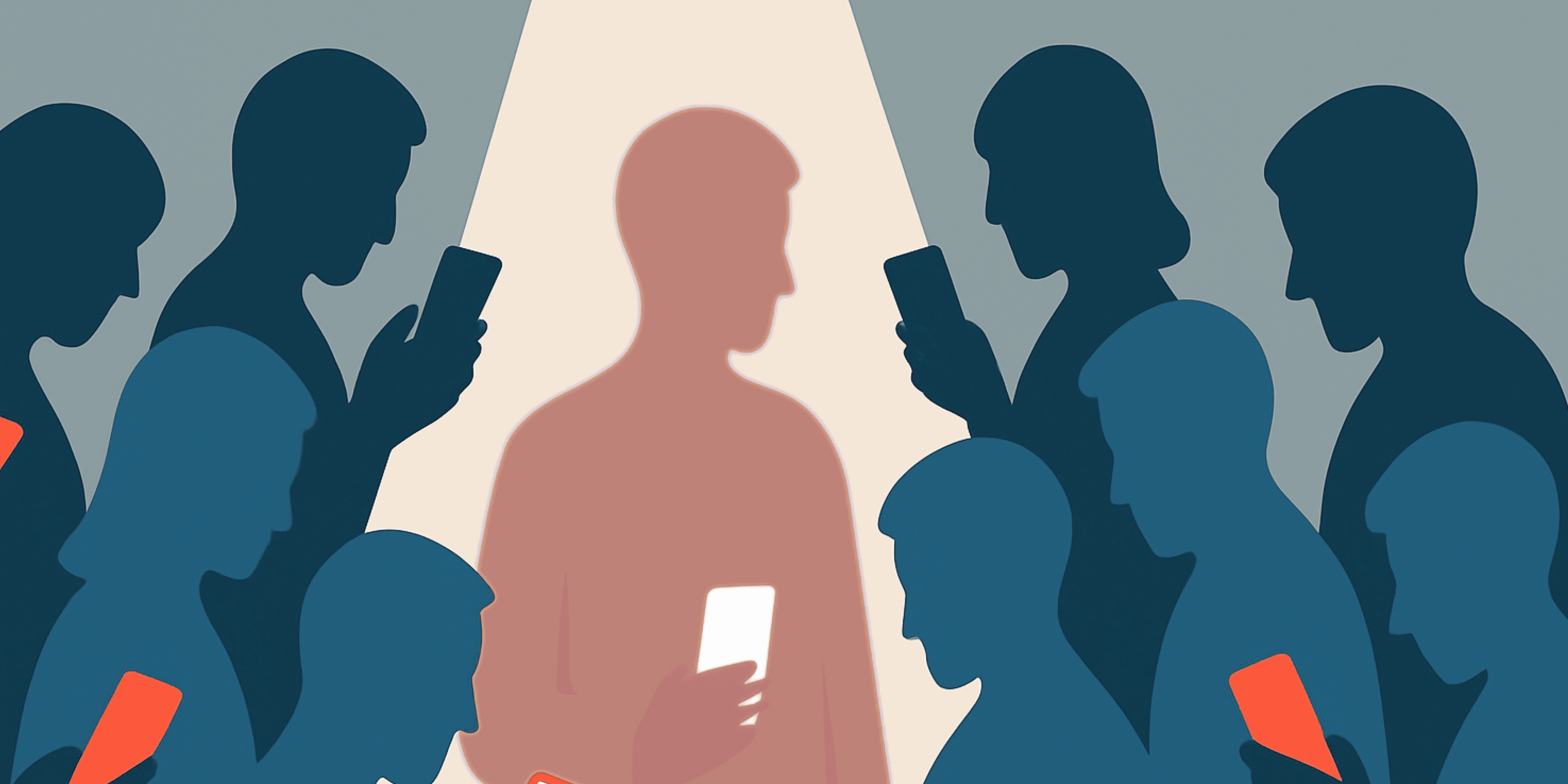
The Internet Divide: Iran’s Elite Access Uncensored Internet While the Public is Blocked
As Iranian officials seek to present the country’s tiered internet policy as “Phased Unfiltering” (or “staged unfiltering”), a small update on X (formerly Twitter) made its real-world effects impossible to ignore. It highlighted what digital rights advocates have long warned: that for years, specific groups in Iran have had access to a "freer internet", meaning an internet without filtering and restrictions, unlike the expensive and heavily censored experience of ordinary users.
The provision of unfiltered internet traces back to 2014, under then telecommunications minister Mohammad-Javad Azari Jahromi.Sources confirmed to Filterwatch that the project, initially called "Journalist Internet," eventually led to up to 3,500 "whitelisted" SIM cards.
When Ebrahim Raisi’s administration took office in 2021, this unfiltered internet access for a group of these users was cut off simultaneously. However, evidence shows that, at the same time, other individuals–especially those who promoted or defended the official policies of the Islamic Republic–gained preferential access to unfiltered internet. During the "Twelve-Day War," which was a period of major internet disruptions, the SIM cards of another group of users were also "whitelisted." So far, no official Iranian authority has announced the exact number of users with access to unfiltered internet, but some independent sources estimate that more than ten thousand users in Iran have access to unfiltered internet or "white SIM cards."
While experts in digital rights and free internet access have long warned about the dangers of implementing a tiered internet policy, the new update on the X platform, which displays the user's connection country of origin, has once again brought renewed public attention to the issue of deepening discrimination to what should be a universal right: equal and free access to the internet.
How Did the New X Feature Lift the Masks?
The new X platform update introduced a small but revealing detail: it now displays the country from which the user is connecting. This was striking because X is officially blocked in Iran, and accessing it requires a VPN. As such, the expectation is that if someone is on X, the displayed country should be other than Iran. But suddenly, a wave of screenshots circulated on X showing that several well-known figures—from former and current members of parliament to media activists close to the establishment, members of the Supreme Council of Cyberspace, and even the Minister of Communications—were seen with the label "Account based in Iran."
As one of the AI engineers at xAI and a former Twitter employee stated, this indicates that the user is connected to X servers with an Iranian IP:
والا اگه لوکیشن بزنه ایران و کنارش علامت تعجب و توضیحی نداشته باشه یعنی داره با آیپی ایران به سرورهای ایکس وصل میشه. ولی خب توی تایملاین دیدم میگن اگه کسی از وارپ، مسک، سرورلس یا اینجور چیزا استفاده کنه آیپی ایران میمونه و خط سفید نیست، من ولی اطلاع دقیقی ندارم در این مورد.
— شایان! (@shayan_s6n) November 23, 2025
Regardless of the technical details, for a large segment of users, this issue had only one meaning: these individuals were accessing the platform without needing a VPN, using "white SIM cards" or other means to access privileged, unfiltered internet. This understanding was enough to spark a wave of public outrage over rent-seeking, discrimination, and digital inequality. These frustrations have simmered for years, amid concerns raised by digital rights activists, but have now been made concrete and visible to ordinary users.
For years, the Islamic Republic has attempted to shape discourse on unofficial media and social networks by granting privileged access to its supporters. This dynamic became especially visible during the nationwide internet shutdown, when protests over a fuel price hike triggered a near-total blackdown. While ordinary users were offline, those with unfiltered access–select individuals, institutions and media outlets–remained active, defending the Islamic Republic's policies and denying the widespread suppression of protesters. These pro-government accounts had gained access to IP whitelisting and, consequently, free internet.
This pattern was repeated during the “12-Day War” in June, when access to the international internet was completely cut off for millions of people. Media reports confirmed that certain officials and specific institutions were still online and active without restrictions. We also know that during the war, some users who defended the Islamic Republic's policies on social networks—without any organizational or institutional affiliation—gained access to unfiltered internet. After the war, reports emerged about businesses seeking similar unfiltered internet, which was approved on July 15th through a regulation to facilitate the activities of digital economy businesses.
Throughout all these years, no formal or transparent documentation has ever been issued regarding this privileged access—no resolution, no regulation, and no public announcement. The "white SIM card" has been distributed in silence, outside of legal frameworks, behind closed doors, and in a discriminatory manner.
In some periods, this access was granted to specific groups such as journalists, academics, or tourists, a process that gradually took what began as ad-hoc exemptions to the form of sustainable policy. In fact, even in periods of political or security crises, the quiet and gradual expansion of the tiered internet continued.
Privilege in the Shadows: SIM Cards for Rent
Filterwatch’s investigations show that some white SIM card holders are even exempt from paying internet costs, while others with the same privileged access still pay normal fees like ordinary users. The mechanism or criteria behind these exemptions remains unclear.This unregulated and opaque has even produced a black market: some individuals with white SIM cards now rent them out to others for a profit. According to Filterwatch, in one instance, a technical staff member of a newspaper who had received a white SIM card was renting it out for 20 million Tomans per month (approx. $400 USD).
Although the Islamic Republic’s primary tool for discriminatory internet access is SIM-based connectivity, this approach also manifests in the provision of fixed-line internet. Some businesses, media outlets, and, according to Filterwatch, even certain individuals have access to unfiltered fixed-line internet.
This multi-layered privilege has clear consequences:
- Structural Corruption: Transforming government-granted access into a source of personal income.
- Digital Discrimination: Dividing society into those with free internet and those who are deprived.
- Public Distrust: Deepening the gap between the people and the decision-making structure.
- Black Market for Information Access: The buying and selling of a state privilege as a scarce commodity.
Thus, the "white SIM card" is both a sign of digital discrimination and an example of the corruption generated by the unequal structure of internet access.
When Tiered Internet is Called "Unfiltering"
One of the strangest parts of recent policy-making in the digital sphere is the changing of vocabulary to normalize discrimination. A process that seems to have been completely consciously designed.
On November 3rd, the University of Tehran announced that access to the YouTube platform was enabled for students through the university's internal network without the need for a VPN. But this announcement, rather than being genuine “unfiltering,” was a clear example of implementing a tiered internet: a specific group receives broader access merely due to their academic status, while the majority of users remain behind the wall of filtering.
This is the familiar model of granting privilege that has been used in various forms for years:
- Journalists' Internet
- Academics' Internet
- Tourist SIM card (which gained attention simultaneously with Ronaldo's arrival in Iran, leading to a wave of user protests)
- Selected Businesses' Internet
- Whitelisted access for institutions
And now it is called "Phased Unfiltering."
In reality, the official language of digital policy in Iran has moved toward decorating discrimination with positive and developmental terms. This neologism, however, does not change the nature of the policy; free access to information has been transformed from a public right into a privilege for selected groups.
The X Network Scandal: Why Are Users So Sensitive?
The public anger observed on social networks is the result of an accumulated dissatisfaction, discrimination, and the lived experience of millions of users who have been living under the burden of filtering for years.
Furthermore, it became clear that the Islamic Republic has succeeded over time in creating narratives and currents on global social platforms like X by using a system of distributing rent-based unfiltered internet among specific groups.
This includes accounts that were active on X in previous years, claiming to be Scottish or Californian, advocating for the independence of these regions. The Telegraph had previously covered these accounts.
اسم این جوان مومن انقلابی، «جسیکا» است. تا حالا اصرار داشت اسکاتلندی است و دغدغه استقلال اسکاتلند را دارد. حالا معلوم شده که دارد از ایران، با پول بیتالمال «جهاد تبیین» میکند. https://t.co/UcyCWjx9LT
— Hossein Bastani حسین باستانی (@hosseinbastani) November 23, 2025
It also became clear that a group of so-called Arzeshi (pro-government) accounts defending the Islamic Republic's policies on X are residents of Western countries, or that some seemingly anti-government accounts are being updated from Iran.
This X update also revealed other information, such as the access of Pezeshkian administration officials to unfiltered internet, despite their claims of opposing the implementation of the tiered internet plan
سخنگوی دولت ظاهرا از فیلترشکن استفاده نمیکرد! https://t.co/c8YfhO2zLV pic.twitter.com/4qLqtDozzr
— Digiato | دیجیاتو (@Digiato) November 23, 2025
as well as the headquarters for updating accounts attributed to hacking groups close to the Islamic Republic or those claiming to oppose it
گروههای هکری کجا هستند؟ اینم داده جالبی است. pic.twitter.com/tMteJxNGoY
— AmiR Rashidi (@Ammir) November 24, 2025
Other important reasons for this widespread sensitivity include:
- Long Experience of Suffering: Internet outages, widespread disruptions, pervasive filtering, and the heavy costs of buying VPNs have become part of people's daily lives.
- Blatant Inequality: When a large part of society must pay extra costs for access to basic services, seeing that some individuals have unrestricted access to free internet exacerbates the feeling of injustice.
- Contradiction in Promises: The Pezeshkian administration had promised to lift the filtering; however, an examination of the resolution for unfiltering cyberspace showed that by implementing this resolution, the government seeks to increase the speed and scope of restrictions while reducing its financial and social costs. Simultaneously, numerous instances of special access are being revealed.
- Memories of National Crises: Memories of past national crises also shape public reactions. The complete internet outages in November 2019 and again in May 2025 remain seared into public consciousness. Knowing now that certain groups stayed online during those blackouts gives those experiences a new and sharper significance.
- Intersection with Tiered Internet Policy: Users can now see better than ever that internet access in Iran is not the same for everyone.
It is clear that the "white SIM card" is not just a technical tool; it is a political and social sign. It is the symbol of a 13-year policy in which free access to the internet is not a citizenship right but an allocable privilege.
The new X feature's only action was to make the discrimination behind the scenes visible and tangible, bringing old privileges to the level of public opinion and deepening the trust gap between the people and the decision-makers. The main issue is not a SIM card, not a platform, and not even VPNs; the issue is the fundamental right to equal access to information, which is severely becoming tiered.